Quick Answer
NDIS support can help eligible participants build everyday skills, make choices, participate in the community and work towards personal goals. The appropriate support depends on the participant’s individual circumstances and plan.
NDIS support can contribute to independence by helping participants build skills, make choices and take part in everyday activities. The appropriate support depends on each person’s goals and circumstances.
Support based on individual goals
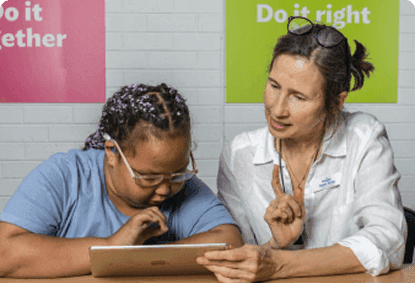
Independence can mean different things for different people. For one participant it may involve preparing meals; for another it may mean travelling to community activities, managing routines or making decisions about daily life. NDIS supports are intended to help eligible participants work towards their goals and participate more fully in everyday activities.
Developing everyday skills
Life-skills support can provide structured opportunities to practise tasks such as cooking, cleaning, communication, planning, budgeting and community access. Support should be appropriate to the participant’s abilities and adjusted as skills change.
Supporting community participation
Being connected to the community can support social relationships, recreation, education and employment-related goals. Depending on plan funding, a support worker may assist a participant to access activities and practise skills needed for greater participation.
Promoting choice and control
Independence also includes having a say in how support is delivered. Participants can communicate preferences about routines, workers, activities and communication. Providers should explain options clearly and respect participant decisions within the relevant NDIS framework.
Measuring progress realistically
Progress does not always mean doing everything without assistance. It can mean needing less prompting, making more decisions, trying new activities or maintaining a routine more consistently. Reviewing goals regularly can help determine whether current supports remain useful.
Practical considerations
Independence is often built through ordinary activities that are meaningful to the participant. Preparing a meal, choosing an activity, travelling to a familiar place, organising a routine or communicating a preference can all represent important steps. Providers should understand what independence means to the participant rather than assuming that the same outcome applies to everyone.
Support should also preserve choice. A participant may need assistance while still making decisions about what to do, when to do it and who provides the support. Clear communication about preferences can help workers provide assistance without unnecessarily taking over tasks. Where a participant’s capacity or communication needs require additional support, the approach should be adapted accordingly.
Quality of life is broader than completing tasks. Social connection, meaningful activities, personal routines and opportunities to pursue interests can all matter. Depending on the participant’s plan, community participation support may help them access activities that align with their goals. Providers can discuss practical ways to connect support with these outcomes.
Progress can be gradual and may not always be measured by doing a task independently. Increased confidence, more consistent participation, fewer prompts or greater ability to communicate choices may also be meaningful. Participants can discuss these changes with their provider and relevant support team to determine whether the current support remains useful.
Conclusion
For participants looking for disability support in Perth, an individualised approach can help connect everyday assistance with meaningful personal goals. Bless Ability can discuss support options designed around individual needs.
Learn about our Development of Daily Living and Life Skills serviceFrequently Asked Questions
How can NDIS support improve independence?
NDIS support can help eligible participants build everyday skills, make choices, participate in the community and work towards personal goals. The appropriate support depends on the participant’s individual circumstances and plan.
How should I choose an NDIS provider?
Compare the provider’s relevant services, participant-centred approach, worker capability, communication, availability, costs and service agreement. Check registration where it is required for your funding or support.
Where can I find NDIS support in Perth?
Participants can use the NDIS Provider Finder for registered providers where appropriate, research provider websites, ask questions directly and meet potential providers before starting services.
This article is general information only and is based on public NDIS guidance. NDIS rules, terminology and provider requirements can change, so check the latest information at ndis.gov.au or speak with your support team.