Quick Answer
NDIS life skills support can help eligible participants practise practical abilities such as cooking, household routines, communication, planning and community access, depending on their goals and funded supports.
NDIS life skills development can help participants work towards greater independence in everyday activities. The focus should be practical, person-centred and connected to the participant’s goals.
What life skills support can include
Life skills development may involve building practical abilities for everyday living. Depending on the participant’s goals, this can include cooking, cleaning, planning routines, communication, community access, shopping, budgeting and other daily tasks.
Connect skills to individual goals
Skills are most useful when they relate to real situations. A participant may want to learn to prepare simple meals, plan a weekly routine, use public transport, communicate preferences or manage household tasks. Providers should understand the goal before designing support activities.
Learning at the participant’s pace
Some participants may learn a task quickly, while others need repetition, prompting or ongoing assistance. Support should be adjusted to the person’s abilities and communication style rather than using a fixed timetable.
Building confidence through practice
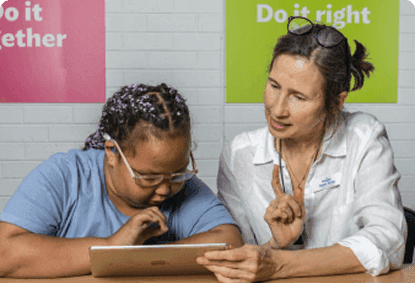
Repeated practice in familiar environments can help participants become more comfortable with everyday tasks. Support workers can demonstrate a task, provide prompts and gradually encourage the participant to take greater responsibility where appropriate.
Reviewing progress
Progress can be recorded through practical observations and participant feedback. Goals can be reviewed with the participant and relevant support team to determine whether the current approach remains appropriate.
Practical considerations
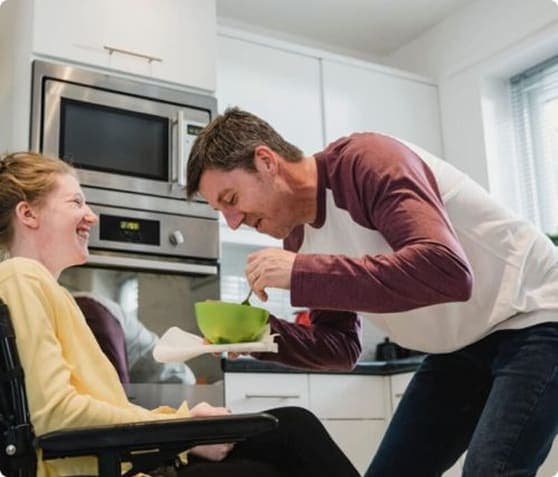
Life-skills development works best when it is connected to everyday situations. Instead of practising an abstract task, a participant might learn to prepare a meal they actually enjoy, plan a shopping list for their own household or organise the steps needed to attend an activity. This makes learning more relevant and easier to apply.
Support workers can use different methods depending on communication and learning preferences. Demonstration, visual prompts, step-by-step instructions, repetition and supported practice may all be useful. The approach should be adjusted to the participant rather than forcing every person through the same process.
Families can reinforce skills by allowing the participant time to practise and make decisions. Completing a task more slowly may be part of learning. Support should balance independence with safety, especially for activities involving cooking, mobility, medication or household equipment.
Progress can be reviewed through participant feedback and practical observations. A goal may change from learning a task, to completing it with prompts, to completing selected parts independently. The appropriate outcome depends on the participant’s abilities and circumstances, and ongoing support may remain valuable even after skills improve.
Conclusion
Bless Ability provides disability support services in Perth that can include assistance with daily routines and life-skills development, depending on individual needs and NDIS funding.
Learn about our Development of Daily Living and Life Skills serviceFrequently Asked Questions
What is NDIS life skills support in Perth?
NDIS life skills support can help eligible participants practise practical abilities such as cooking, household routines, communication, planning and community access, depending on their goals and funded supports.
How should I choose an NDIS provider?
Compare the provider’s relevant services, participant-centred approach, worker capability, communication, availability, costs and service agreement. Check registration where it is required for your funding or support.
Where can I find NDIS support in Perth?
Participants can use the NDIS Provider Finder for registered providers where appropriate, research provider websites, ask questions directly and meet potential providers before starting services.
This article is general information only and is based on public NDIS guidance. NDIS rules, terminology and provider requirements can change, so check the latest information at ndis.gov.au or speak with your support team.